
Princeton, NJ · Garage Door Service
Why Princeton Garage Door Springs Snap When It's Cold
Princeton homes built 1938-2004 still run original steel torsion springs that shrink and snap in winter cold. Here's what breaks, why, and what it runs.
- Repairs & new doors
- Springs & openers
- Serving 7 nearby communities
How Local Conditions Play In
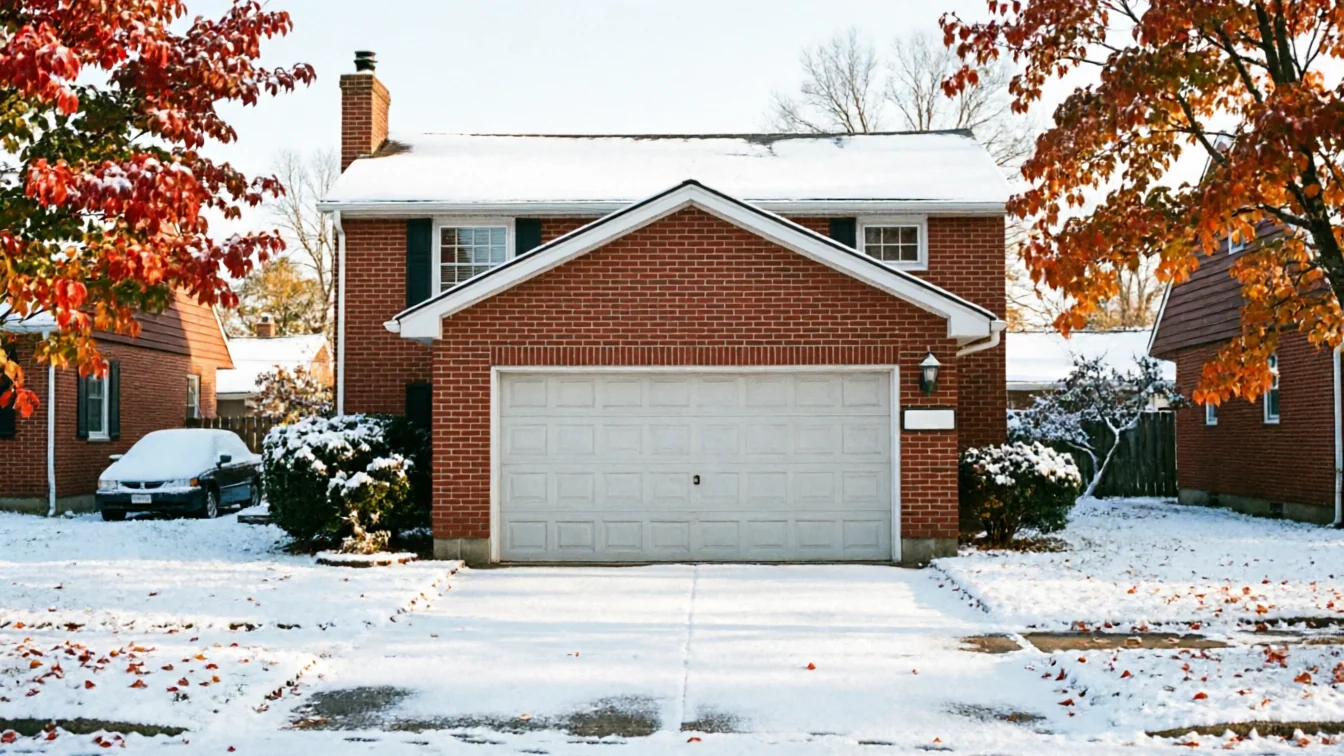
Steel contracts when it gets cold, and a torsion spring is just coiled steel under constant tension. In a severe cold climate band like this one, that contraction adds stress to metal that's already fatigued from years of lifting a 150-to-200-pound door. Most houses around here went up between 1938 and 2004, with the bulk of the stock dating to the 1960s and 70s across the towns we work in - Kingston, Rocky Hill, Princeton Junction, Montgomery, and the rest. A spring installed when a 1960s split-level was built, or even one replaced twenty years ago, is well past the point where cold snaps matter less than age. The spring doesn't know it's cold outside. It just reaches its cycle limit and the cold is what pushes it over that line on a given morning instead of a milder one. We see the pattern every winter: doors that worked fine in November stop lifting in January because the last few degrees of flex that cold steel has left just aren't there anymore. It's not dramatic, it's physics catching up with a part that was already tired.
What It Costs
We don't have a flat number to hand you here, because torsion spring jobs vary with door weight, spring size, and whether one side went or both. What we can tell you is how to think about it: a double garage door on an older torsion setup almost always needs the springs replaced in pairs, even if only one broke, because the other one is carrying the same age and the same cold-weather stress. Skipping that second spring to save money is false economy - it fails within a season, usually on another cold morning. If your opener motor also strained trying to lift a door with a dead spring, that's a second thing to check before you call the job done. We'd rather tell you the honest range after we see the door and the drums than guess over the phone and have to revise it on-site.
The Common Mistake
The mistake we run into most in this area is someone hearing the bang of a spring letting go and assuming the opener is broken. It isn't, usually. The opener is a small motor built to nudge a balanced door; it was never built to lift the full weight on its own, and trying to force it with the manual release pulled or not will burn out the drive gear fast. With housing stock this old - median year built 1966 - a lot of these openers have already been swapped once or twice, while the original torsion hardware stayed put. People troubleshoot the newer part and ignore the older one that's actually failing. The other mistake is leaving a broken spring over a holiday week assuming it'll hold until someone's free. A single spring supporting a double door's full weight on the cable and drum side is a cable-snap risk, not just an inconvenience.
The Situation
If your door won't lift, or lifts a few inches and stops, or the opener strains and reverses, check first whether you can see a gap in the spring above the door - that's the giveaway. Don't try to open it manually past that point; a door held by one working spring or no spring at all can come down hard. This area runs 84,817 owner-occupied houses across roughly 184,255 households, and a good share of those garages are carrying torsion hardware that's decades old by now. Cold weather doesn't cause the failure so much as it picks the day. We'll tell you straight if a repair makes sense or if the drums and shaft are worn enough that replacing the whole operating system is the better call - sometimes a 1970s torsion setup just isn't worth patching piece by piece.
Frequently asked questions
Why did my spring break on such a cold morning?
Cold steel has less give left in it, and a spring that's already near the end of its cycle life is the one that goes first when the temperature drops. It's less about one cold snap and more about years of lift cycles catching up with the metal at the moment it has the least flexibility left.
Should I replace one spring or both?
On a double door with a torsion pair, we generally replace both even if only one broke. They're the same age, under the same load, and the second one is close behind. Replacing just one usually means a second service call within a year.
Can I drive the door with the opener if the spring broke?
No. The opener isn't built to lift the door's full weight alone and will strain the drive gear or trip the safety reversal. Leave the door down, don't force the manual release, and get the spring looked at before using it again.
How old does a spring usually get before it fails?
It depends on cycles, not just calendar years, but in homes from this area's common 1960s-70s building period, original or long-ago-replaced torsion springs are frequently the ones that let go, especially once cold weather adds extra stress to tired steel.
Related garage door services in Princeton
More garage door guides
Book garage door service in Princeton
Call now or request a quote - tell us what the door is doing and where you are.