
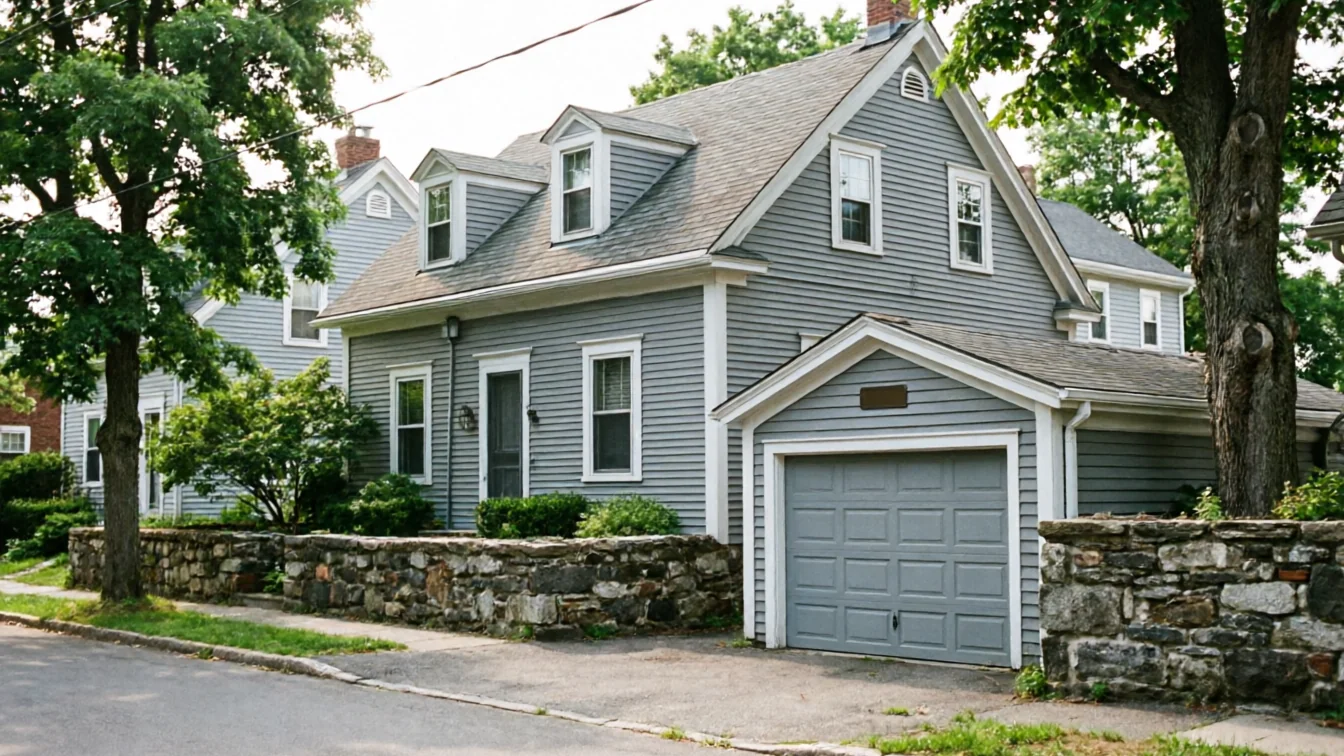
Princeton, NJ · Garage Door Service
Garage Door Service for Raritan, NJ Homeowners
Raritan homes mostly date to 1987, later than much of Princeton's service area - different doors, different fixes. Princeton Garage Door Co serves Raritan.
- Repairs & new doors
- Springs & openers
- Serving 7 nearby communities
This Area's Housing
Raritan's housing stock runs later than you'd expect from a typical Princeton-area call. The median build year here lands around 1987, a full two decades past the 1960s-70s wave that put up most of the roughly 61 named sections across the wider service area, where the median sits closer to 1966. That gap matters more than it sounds. A house built in 1987 was framed, wired, and fitted with a garage door to a different set of building habits than one built in 1966 - different header heights, different track clearances, different factory hardware.
With about 8,988 households in Raritan and a median income of $159,808, this is also a different kind of homeowner base than some of the older, lower-income pockets elsewhere in the service area. People here are more likely to have already replaced a factory door or opener at least once - these houses are old enough for one full hardware cycle, not two or three. That changes what a technician finds behind the panel: fewer original-to-the-house openers, more aftermarket upgrades layered on top of 1980s bones.
How That Shows Up in the Door
A door built around 1987 almost always left the factory with torsion springs mounted on a single shaft over the header, not the older extension-spring pairs you still find bolted to the upper tracks of pre-1970s houses elsewhere in the region. That's the single biggest difference a Raritan call turns up versus an older block. Torsion setups fail differently - the spring winds down on itself rather than stretching, and when it goes, the door usually won't lift at all instead of lifting unevenly.
Openers from this era, or the first replacement generation that followed, tend to be chain-drive units with circuit boards that weren't built for decades of cold-season cycling. The service area sits in a cold, severe climate band, and a steel door from the late '80s with its original weatherstrip has had nearly forty winters to let that rubber crack and shrink. The gaps show up as light under the door and cold air along the bottom panel before anyone notices a mechanical problem. None of this means the door is failing - it usually means the seal and the spring tension are due, well before the opener motor itself gives out.
The Calls We Get From Here
Most calls out of Raritan fall into two buckets: a torsion spring that's finally let go after years of winding and unwinding, and an opener board that's stopped responding reliably in cold weather. Both track back to the 1987-era hardware baseline - torsion springs are standard here, so when a door won't budge, that's almost always the first thing checked, not the extension springs a crew might expect on an older house closer to Princeton itself.
We also hear from people whose sensors have started acting erratic - the door reverses on its way down for no visible reason. On houses this age, that's frequently a wiring connection that's loosened at the sensor eye rather than a sensor that needs replacing outright, though sometimes it is the sensor. We won't know which until someone's looked at it in person, and we'd rather say that than guess over the phone.
The Usual Work Here
Torsion spring replacement is the most common job we do in Raritan, which lines up with the build era - these houses were fitted with torsion systems from day one, and thirty-plus years of cycling is close to the end of life for the original spring. Opener swaps come next, usually when a chain-drive unit from the 80s or 90s finally stops holding a connection to its remote or keypad.
Weatherstrip and bottom-seal replacement shows up often too, given the cold-severe climate this area sits in - vinyl that's been compressed under a door for decades loses its seal well before anyone notices a mechanical fault.
One honest limitation: Raritan is about 18 miles out from Princeton, so we don't keep a crew stationed here and can't promise a same-day slot the way we might for calls closer in. We'll tell you up front where a job falls in the route for that day rather than quote a response time we can't back up.
Frequently asked questions
Why does my 1980s garage door use torsion springs instead of the older kind?
By the time most Raritan houses were built, around 1987, torsion springs mounted on a shaft over the door header had become the standard setup, replacing the older extension-spring pairs common on houses from the 1960s and earlier elsewhere in the service area. It's simply what builders were installing by then, not a sign of anything unusual about your house.
Do you have a crew based in Raritan?
No. We work out of Princeton, about 18 miles from Raritan, and travel in for calls. That means we can't promise a same-day response the way a locally based shop might, but we'll tell you honestly where your job falls in the day's route before you book.
My door reverses on the way down for no reason - is that the sensor?
On houses built around the 1980s, that's often a loose wiring connection at the sensor eye rather than a failed sensor itself, though it can be either. We'd need to look at it in person to say which - we won't guess over the phone and charge you for a part you didn't need.
Why does my weatherstripping keep cracking even though the door still works fine?
This area sits in a cold, severe climate band, and vinyl seals compressed under a door for decades lose their flex well before the opener or spring fails. If you're seeing daylight or feeling a draft along the bottom panel, that's usually a seal problem, not a mechanical one.
Garage door services in Raritan
Every service our crew runs in Raritan, NJ.
Book garage door service in Princeton
Call now or request a quote - tell us what the door is doing and where you are.