
Princeton, NJ · Garage Door Service
Why Your Safety Sensors Keep Drifting Out of Alignment in Princeton
Princeton homes built 1938-2004 on severe-cold ground movement throw sensor alignment off. Here's why it happens here and what it actually costs to fix.
- Repairs & new doors
- Springs & openers
- Serving 7 nearby communities
How Local Conditions Play In
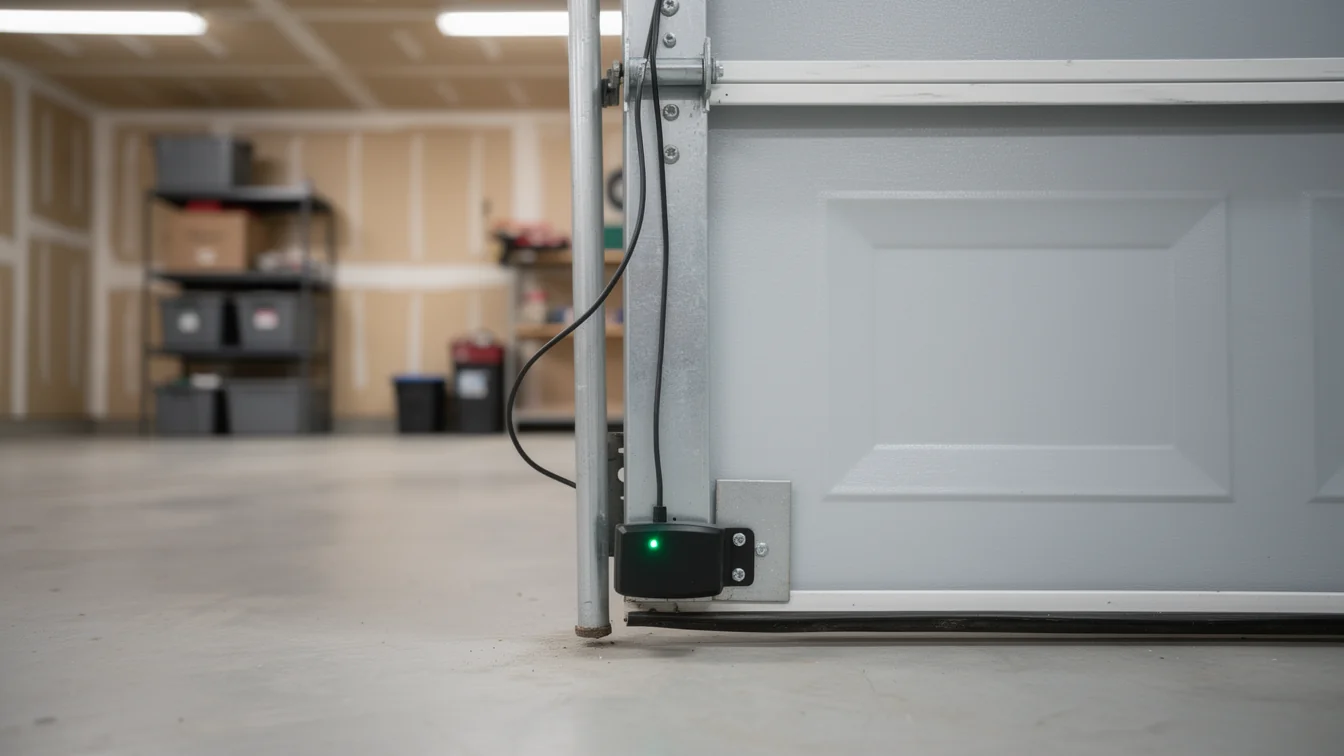
Princeton's winters fall into the severe end of the cold climate band, and that matters more than most homeowners think when it comes to a pair of photoelectric eyes mounted six inches off the slab. Freeze-thaw cycles work the concrete under your garage floor and the wood jamb your sensor brackets are screwed into. The slab heaves a little, settles a little, heaves again. Over a winter or two, that movement is enough to twist a bracket out of true, even if nobody ever bumped it with a bike or a snow shovel.
Houses here mostly went up between 1938 and 2004, with the median sitting around 1966, which means a lot of garage door openers and sensor brackets were installed on framing that's older than the photoelectric safety sensors themselves. Older jambs have had decades to shift, and when the jamb shifts, the sensor shifts with it, even if the sensor itself is only a few years old. Across the 61 named areas that make up this housing stock, most of it dates to the 1960s and 70s, so the wood jambs sensors are bolted to have had five decades to warp, twist, or settle a fraction of a degree a year. That's not a defect. That's just what happens to a house this age in a climate this cold.
What It Costs
We don't have a flat number to give you here, and we're not going to make one up. What drives the cost is whether this is an alignment job or a bracket replacement job. If the sensors just need to be re-aimed and the wiring is sound, that's quick work. If the bracket itself is bent, rusted through, or the screw holes have stripped out of a jamb that's seen fifty winters, you're into a parts-and-labor job instead of a five-minute fix.
The honest limitation: if your opener is old enough that the sensor wiring uses a connector type we can't match to a new photoelectric eye, repair isn't always possible, and replacing the sensor pair (sometimes the whole opener) is the straighter path. We'll tell you which one you're looking at before we touch anything, not after.
The Common Mistake
The mistake we see most is someone noticing the door won't close, assuming the sensors are broken, and reaching for a screwdriver to crank the eye bolts down tighter. Tightening doesn't fix misalignment, it just locks the sensor into whatever bad angle it's already drifted to. The other common move is taping over one sensor's lens to "trick" the door into closing. That defeats the safety function entirely, and on an older bracket that's already shifted with the jamb, you've now got a door that closes blind over whatever's underneath it.
The actual fix is almost always re-aiming both eyes so their indicator lights go solid, then checking whether the bracket itself has moved relative to the track, which on a house with original framing from the 1960s or 70s is worth checking every season, not just when the door stops working.
The Situation
A typical call here is a house built somewhere in that 1938 to 2004 range, median year 1966, where the garage door has worked fine for years and then one cold snap it starts reversing for no visible reason. Nothing is blocking the sensors. The eyes light up. The door still won't close. Nine times out of ten the jamb has moved enough over the winter that the sensor pair is a half-inch out of true, which is enough for the beam to miss.
Median household income across this area runs $108,851, and a lot of these households own rather than rent, which means the person dealing with the sensor problem is usually the one who's going to live with whatever fix gets applied. We'd rather re-aim it right the first time than send someone back out in six weeks because the bracket wasn't actually the problem.
Frequently asked questions
Why do my garage door sensors work fine in summer but fail in winter?
Cold-climate ground movement shifts your slab and door jamb over the winter, and the sensor brackets move with them. By spring the beam between the two eyes can be a half-inch or more out of alignment, which is enough for the door to reverse even though nothing is blocking it.
Can I just realign the sensors myself?
Often yes, if the bracket itself is intact. Loosen the wing nut, aim both eyes until the indicator lights go solid, retighten gently. If the bracket is bent or the screw holes have stripped out of an older jamb, that's a different job and tightening won't hold.
Is it ever not worth fixing the sensors and better to replace the opener?
If the wiring or connector type on an older opener doesn't match current photoelectric sensors, repair isn't always possible. We'll check that before doing anything, since on some older setups replacing the opener is the more straightforward path.
Related garage door services in Princeton
More garage door guides
Book garage door service in Princeton
Call now or request a quote - tell us what the door is doing and where you are.