
Princeton, NJ · Garage Door Service
Garage Door Repair & Installation in Monmouth Junction
Garage door service for Monmouth Junction, NJ, where most homes went up in the 1980s-90s - newer openers, different failure points than Princeton's older stock.
- Repairs & new doors
- Springs & openers
- Serving 7 nearby communities
This Area's Housing
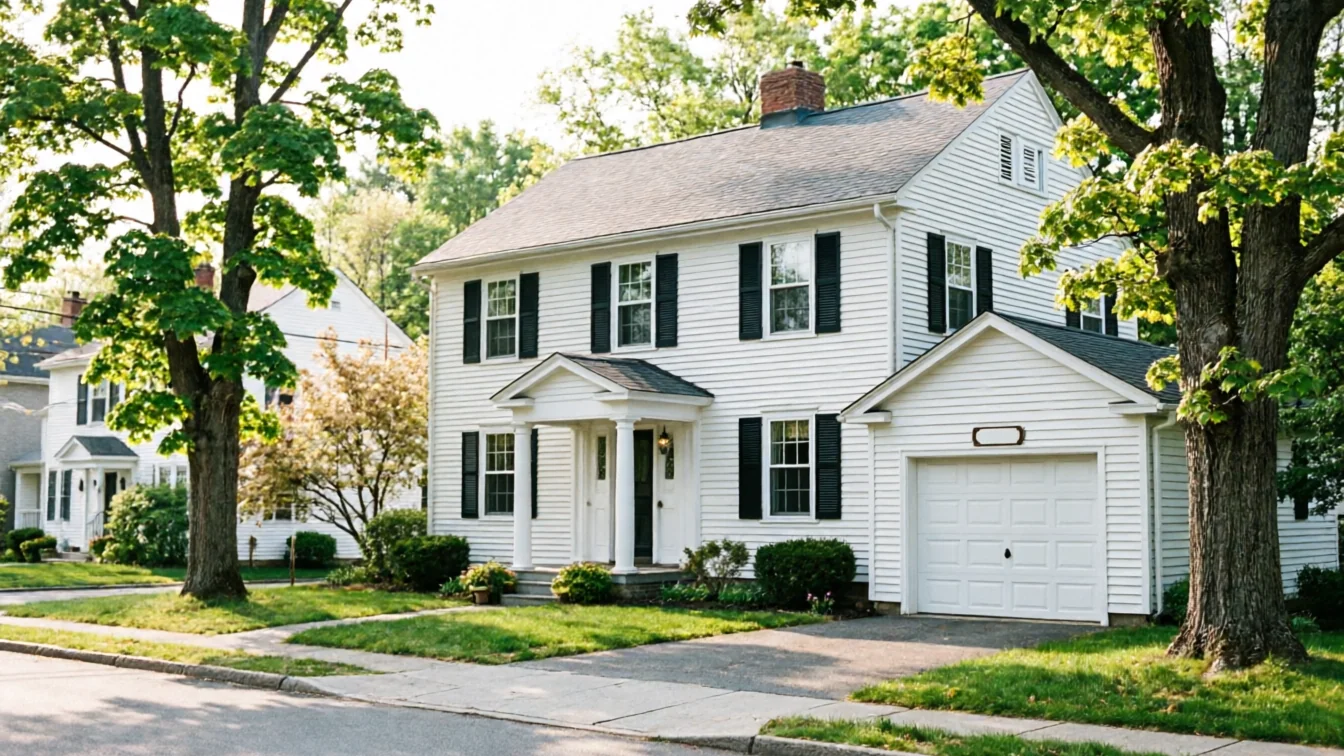
Monmouth Junction is younger than most of the towns we cover. Across our wider service area, the median house dates to 1966 and a lot of that stock runs 1960s to 1970s construction. Here, the median build year is 1992 - a full generation later. That gap matters more than it sounds like it should.
Homes built in the early 90s came with factory-installed steel sectional doors and chain or belt-drive openers from the start, not retrofits bolted onto an older frame. The jambs are square, the headroom is standard, and the wiring for an opener was usually run during construction instead of added after the fact. With 3,567 households in this area, you've got a fairly uniform generation of garage doors going through the same wear curve at roughly the same time - which is a different problem than the patchwork of eras you find closer to Princeton.
Median household income here runs $125,892, noticeably above the $108,851 figure across the broader service area. That tends to show up in more owners choosing full opener replacement over a patched repair when something fails, rather than keeping a unit running past its useful life.
How That Shows Up in the Door
Because so much of Monmouth Junction's housing went up in the same ten-to-fifteen-year window, the doors and openers out here are hitting the same age-related failures at close to the same time - not scattered across eras like you'd see in a town with 1930s-to-2000s housing stock. That means torsion springs rated for a standard 7-foot steel door, not the oversized or oddly-dimensioned one-piece doors you find on older homes.
The openers installed in this window are mostly chain-drive units from the 90s that are now thirty-plus years old - well past the point where the gear and sprocket assembly or the circuit board should be trusted blind. We see more stripped gears and dead logic boards out here than snapped cables, because the doors themselves were built square and have aged evenly.
Winters in this region fall in the severe-cold band, and steel contracts in that kind of cold - a door that rolled quiet in August can bind or jump the track in January as tolerances tighten. On a 1990s door with original rollers, that's usually the first sign the rollers need replacing before the track does.
The Calls We Get From Here
Most calls from Monmouth Junction fall into two buckets: openers reaching the end of their service life, and springs that were sized correctly in 1992 but have simply worn out after thirty-plus years of cycles. We don't see much of the mismatched-hardware work that's common in older towns, where a replacement door from decades back got hung on original track that was never meant for it.
We travel out from Princeton for these calls - Monmouth Junction isn't a depot location, it's about 6 miles east-northeast of our shop, which is a short run most days. We don't keep a truck stationed in town, so the job gets scheduled rather than walked-in.
A fair number of calls here are proactive: an opener logic board starting to act erratically, a spring that's visibly stretched gap between coils, rollers that have gone from steel to worn plastic. Homeowners in this income bracket tend to call before full failure rather than after, which gives us more room to recommend a planned swap instead of an emergency one.
The Usual Work Here
Given the age and consistency of the housing stock, most of our work in Monmouth Junction is opener replacement and spring swaps on standard steel sectional doors - straightforward jobs on hardware that was built to code from day one, not retrofitted. We don't see much call for custom-sized doors or oddball track configurations out here.
One honest limitation: if your opener is an original 90s chain-drive unit and the logic board has failed, we usually recommend full replacement rather than sourcing a board for a thirty-year-old model. Parts for openers that old are getting harder to find, and a new belt-drive unit will run quieter and last longer than chasing a part for the original.
We also replace worn rollers and cables as routine maintenance rather than waiting for a failure, since the uniform age of the stock here means a lot of hardware is approaching the same wear point at once. If your door was installed with the house in the early 90s, it's worth having it looked at now rather than after a cable snaps on a cold morning.
Frequently asked questions
Is my garage door opener too old to repair?
If your home was built in the early 1990s, as most in Monmouth Junction were, your original opener is now over thirty years old. At that age, a failed logic board usually isn't worth chasing a replacement part for - we'll tell you honestly when a new belt-drive unit makes more sense than a repair.
Do you have a crew based in Monmouth Junction?
No. We run out of Princeton, about 6 miles east-northeast of Monmouth Junction, and schedule calls out to this area rather than keeping a truck stationed here. It's a short drive for us, but it means jobs are scheduled, not walk-in.
Why do springs fail around the same time on so many houses here?
Monmouth Junction's housing stock is unusually uniform - median build year 1992 - so a lot of torsion springs installed at construction are reaching the end of their rated cycle count around the same window. It's a side effect of the whole area going up in a short span rather than any one issue.
Does cold weather actually affect a newer steel door?
Yes. This region sits in a severe-cold climate band, and steel panels and track contract in winter regardless of the door's age. On a 1990s door with original rollers, that's often when binding or a jumped track shows up first, even if the door ran fine all summer.
Garage door services in Monmouth Junction
Every service our crew runs in Monmouth Junction, NJ.
Book garage door service in Princeton
Call now or request a quote - tell us what the door is doing and where you are.