Princeton, NJ · Garage Door Service
Princeton, NJ Garage Door Repair for Pre-1970s Older Homes
Princeton homes span 1938 to 2004, many with original hardware unsuited to severe cold winters. We repair springs, openers, and panels for this stock.
- Repairs & new doors
- Springs & openers
- Serving 7 nearby communities
How Local Conditions Play In
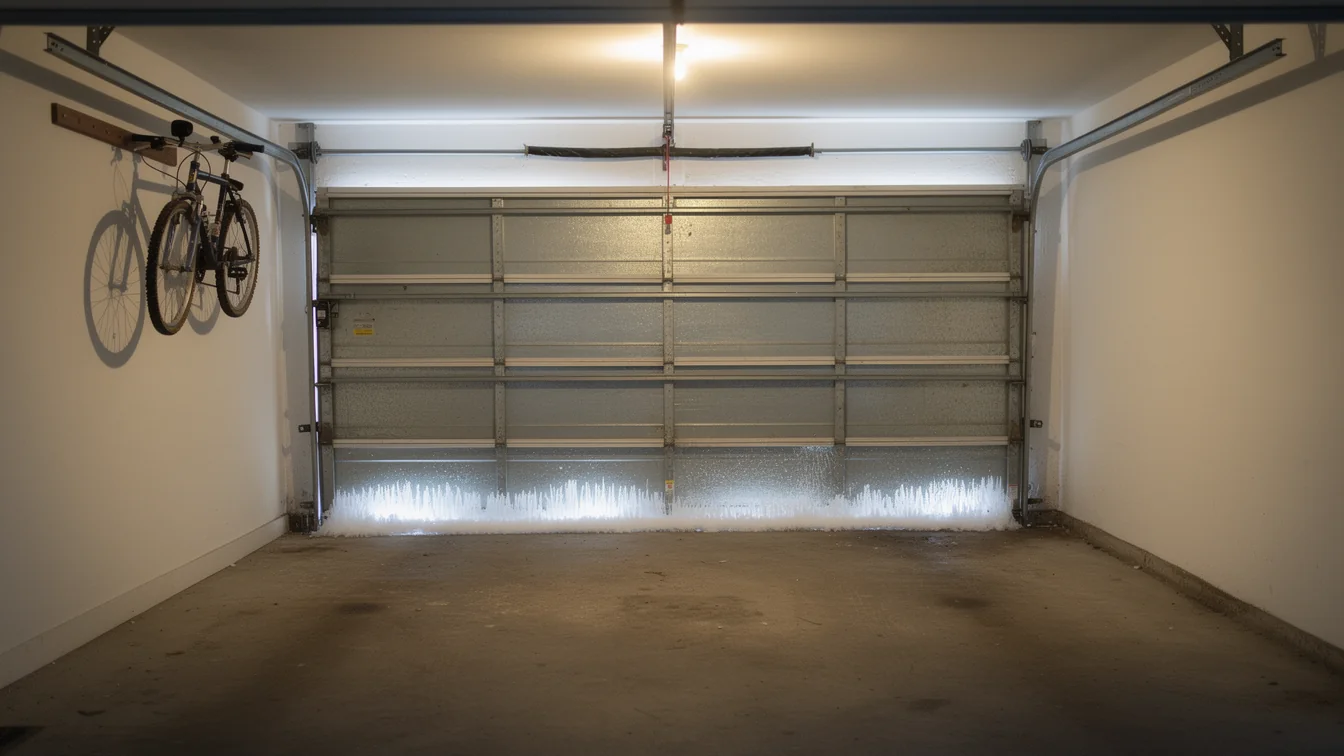
Most houses in Princeton and the surrounding towns we cover - Kingston, Rocky Hill, Princeton Junction, Montgomery, and the rest out to Skillman and Hopewell - went up between 1938 and 2004, with the median build year sitting at 1966. That means a lot of doors on this side of the market are original to houses from the 1960s and '70s, the decades that make up most of the 61 named areas we see work in. Doors from that era were built before insulation rules were common in residential garage construction. They're single-layer steel or wood, with no foam core, no thermal break at the track, and weatherstripping that was never meant to hold against a New Jersey winter. The region sits in a severe cold climate band, with the kind of temperature swings that make steel contract, hinges stiffen, and nylon rollers crack. On an insulated door from the last fifteen years, that's a minor inconvenience. On a 1960s panel with no insulation, the cold works on bare metal directly, and you feel it in how hard the opener has to pull on a frozen track. We see this pattern most in the older sections closer to the center of town, where original hardware on side-mounted torsion springs is still common, and parts for it are getting harder to source.
What It Costs
We're not going to give you a number here we can't back up - cost varies by door size, insulation level, and whether it's the opener or just the spring that needs work. What we can tell you is what drives the decision in this market specifically. Princeton's median household income sits at $108,851, and across the wider service area there are roughly 84,817 owner-occupied houses out of 184,255 households. That's a lot of homes with real equity in them, and it shows in what people ask us to quote: full replacement with an insulated door more often than a patch job, because the houses are worth the investment and the winters are hard enough that an insulated door earns its keep over the life of the opener. A repair on a 1960s torsion spring costs less than replacing a whole section, but if the door itself is original to a house built before 2000, fixing one part often just moves the failure point to the next weak spot - a cable, a roller, a hinge the same age as the spring you just replaced. We'll tell you straight whether a repair is worth doing or whether that money is better spent on a door built for the cold this area actually gets.
The Common Mistake
The mistake we see most in Princeton is homeowners replacing a broken spring or cable on an old uninsulated door and stopping there, treating it as fixed. On a door built before insulation rules were standard, that spring break usually isn't random - it's the cold. Severe winter swings put extra load on torsion springs that were never rated for repeated thermal contraction on bare steel. Fix the spring without looking at the rest of the door and you're back out here in a year or two for the next part down the line. The other version of this mistake runs the other way: tearing out a perfectly sound door from the 1970s because one panel is dented, when the frame and track are fine and a single-panel swap would do the job. Not every door from this era needs to go. Some are solid, just uninsulated, and a repair plus a retrofit insulation kit is the honest fix. The point isn't repair-versus-replace as a blanket rule - it's that on houses this age, in this climate, you look at the whole door system, not just the part that failed, before deciding which way to go.
The Situation
We work on garage doors across Princeton and the towns around it - Kingston and Rocky Hill about three miles out, Princeton Junction the same distance southeast, Montgomery and Skillman to the north and northwest, Hopewell six miles northwest, and farther out through Cranbury, Dayton, Hightstown, and East Windsor. Across that service area there are 184,255 households, most sitting on housing stock from the 1960s and '70s, with the broader build range running 1938 to 2004. That's the situation we're built around: a region of older homes in a climate that's hard on garage doors, where the common job isn't a brand-new install on a brand-new house, it's working with hardware that's been there longer than the homeowner has. We carry parts for older torsion and extension spring setups because that's what's actually on these doors, not because it's unusual. If your door is original to a house built in the 1960s, we can usually tell you on sight whether it's a repair or a replacement conversation before we even open the panel.
Frequently asked questions
My house was built in the 1960s - is the original door still repairable?
Often, yes. A lot of Princeton-area houses date to the 1960s and '70s, and plenty of those original doors are still structurally sound, just uninsulated. We check the track, hinges, and spring condition before recommending full replacement - a sound frame with worn hardware is usually a repair, not a teardown.
Why does my garage door act up more in winter?
This area sits in a severe cold climate band, and steel contracts in the cold while nylon rollers and old weatherstripping stiffen and crack. On an uninsulated door original to an older house, that stress hits bare metal directly, which is why springs and cables tend to fail more in the coldest stretches.
Do you work outside Princeton itself?
Yes. We cover the surrounding towns too - Kingston, Rocky Hill, and Princeton Junction are all about three miles out, with Montgomery, Skillman, and Hopewell a bit farther, and service extending out through Cranbury, Dayton, and East Windsor.
What's the real downside of an old uninsulated door?
Beyond comfort, it's wear. No foam core means more direct stress on the hardware during cold swings, so springs, rollers, and cables all age faster than they would on an insulated door. It's not dangerous, but it does mean more frequent small repairs over time.
Related garage door services in Princeton
More garage door guides
Book garage door service in Princeton
Call now or request a quote - tell us what the door is doing and where you are.