
Princeton, NJ · Garage Door Service
Detached vs Attached Garage Doors: What Princeton's Housing Stock Changes
How Princeton's 1938-2004 housing stock and cold climate change what a detached or attached garage door needs to do, and what that means for cost and repair.
- Repairs & new doors
- Springs & openers
- Serving 7 nearby communities
How Local Conditions Play In
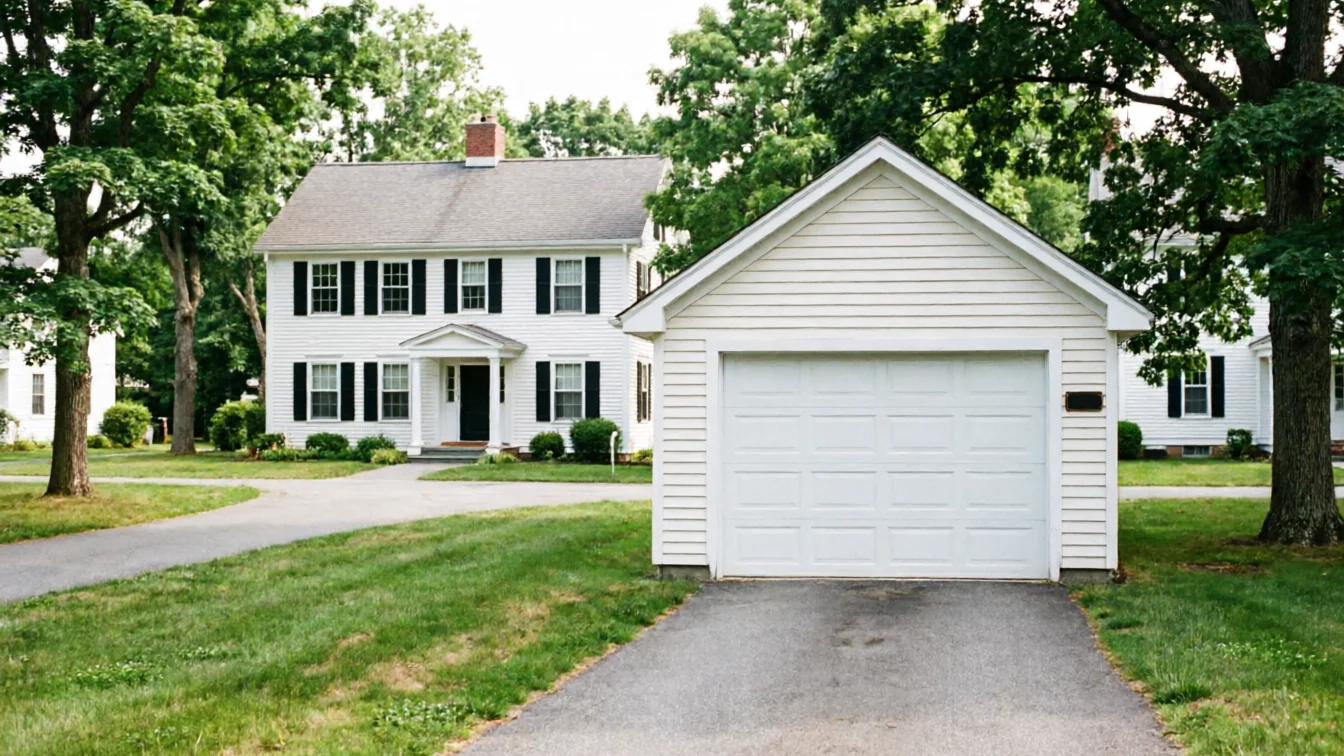
Most houses in this part of the state went up between 1938 and 2004, with the median build year landing around 1966, and that split matters more than people think. A detached garage from that era was usually framed as a separate box with its own roofline - no shared wall, no shared heat load, and often a door that was never meant to seal tight. An attached garage from the same decade is a different animal: it shares a wall, sometimes a ceiling, with living space.\n\nWith a cold-severe climate band here, that difference shows up every winter. An attached garage without a properly sealed, insulated door becomes the coldest room next to the one you're heating, and that cold transfers through the shared wall whether you notice it or not. A detached garage doesn't carry that penalty the same way - it's cold on its own terms, and nobody's heating bill cares.\n\nAcross the 61 named areas that make up this housing stock, the 1960s and 70s dominate, which means a lot of attached garages share a top plate with the house itself, with only drywall between the door opener and a bedroom wall. That's not a problem until the door starts rattling at 2 a.m.
What It Costs
We don't have a flat number to hand you here, and we're not going to make one up. What we can tell you is what drives the difference between a detached and attached job on a house built in this window.\n\nAn attached garage door almost always needs insulation and a tighter seal to matter for the room next to it - that's added material and labor the detached version doesn't need. A detached garage door, on the other hand, is often a simpler swap: no shared wall to protect, no drywall to patch if the track needs to move.\n\nAt a median household income of $108,851 across this area, most of the calls we get aren't people hunting the cheapest door on the shelf. They're people who've already paid once for a door that didn't hold up through a few winters and don't want to do that twice. Across the service area's 84,817 owner-occupied houses, the detached garage is still common enough that a fair share of our work is on a door that was never built to the same spec as the attached ones next door - lighter gauge steel, no insulation layer, because nobody figured it needed one.
The Common Mistake
The mistake we see most is homeowners treating a detached garage door and an attached garage door as the same purchase. They're not. On a house from the 1960s or 70s stock that makes up so much of this area, an attached garage door that isn't insulated is doing real damage to the room on the other side of that shared wall - higher heating bills, condensation on the inside of the door in a cold-severe winter, sometimes mold on the drywall nobody checks.\n\nGo the other direction and over-spec a detached garage that's never heated, and you're paying for insulation value that has nowhere to go. It's wasted money on a door that just needs to open, close, and keep weather out.\n\nThe honest limitation here: we can't tell you which one your garage is from a phone call. A quick look at the wall it shares, or doesn't share, with the house tells us in five minutes what the right spec actually is. Guessing from a sales brochure doesn't.
The Situation
If you're in an older section of town where the garage sits as its own building, set apart from the house, you're dealing with a detached door, and the climate here matters more than the house's age - it needs to hold up to a cold-severe winter on its own, with no help from the house's heating system.\n\nIf your garage shares a wall with a bedroom, a laundry room, or anything you heat, you've got an attached door, and the build year matters more. Houses built closer to the 1966 median in this stock often still have their original, uninsulated door, which was fine for the standards of that decade and isn't fine now.\n\nEither way, the fix starts with knowing which kind of garage you actually have, not assuming one spec covers both. We work on both kinds.
Frequently asked questions
Does my garage door need insulation if it's attached to the house?
If it shares a wall with living space, yes, almost always - especially given the cold-severe winters here. An uninsulated door on an attached garage lets cold transfer straight through that shared wall into the room next door, which shows up as a higher heating bill and sometimes condensation on the inside of the door itself.
Is a detached garage door cheaper to replace than an attached one?
Often, yes, because it doesn't need the same insulation or sealing to protect a shared wall. But the right number depends on the door's size, material, and condition, not just which kind of garage it's on - we'd need to look at it rather than quote blind.
My house was built in the 1960s - is the original door still in there?
It's common. A lot of the housing stock in this area dates to right around 1966, and original one-piece or early sectional doors on side-mounted hardware are still out there. Parts for that hardware are getting harder to source, which is usually what pushes a repair toward a full replacement instead.
Related garage door services in Princeton
More garage door guides
Book garage door service in Princeton
Call now or request a quote - tell us what the door is doing and where you are.