
Princeton, NJ · Garage Door Service
Stopping the Draft in a Princeton Garage
Princeton homes built mostly in the 1960s-70s lose heat fast through old garage door seals. Here's what drives the draft, and what fixing it actually involves.
- Repairs & new doors
- Springs & openers
- Serving 7 nearby communities
How Local Conditions Play In
Most of the houses we work on in and around Princeton went up between 1938 and 2004, with the median build year sitting at 1966. That means a lot of garages still running the bottom seals, side weatherstrip, and top astragal that came with a door installed decades ago, on tracks and jambs that have settled since. Princeton sits in a cold, severe climate band, which matters more than people think for a garage. It's not just about the door losing heat - it's about the swing between a warm afternoon and a hard overnight freeze cracking old rubber seals faster than they'd wear in a milder spot.
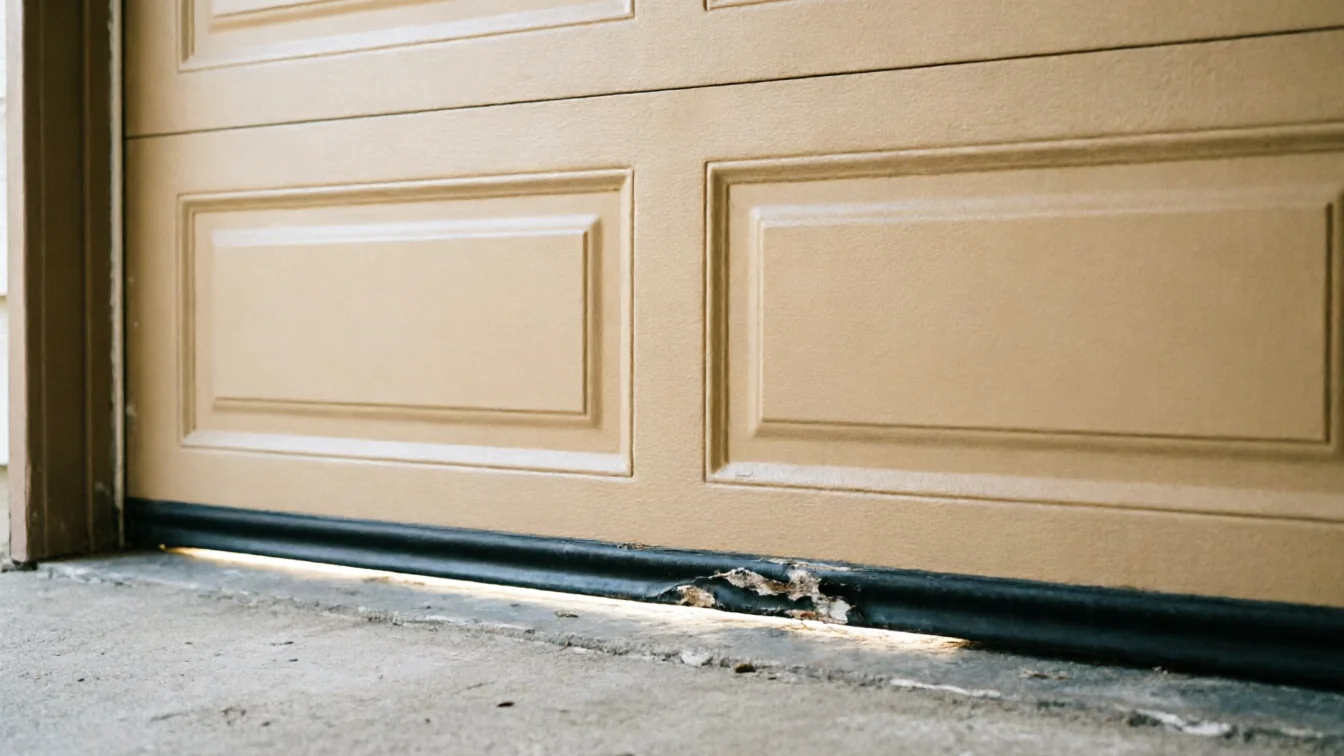
Once a bottom seal splits or a side seal pulls away from the track, you get a visible gap, and that gap doesn't stay the same size all winter. PVC and rubber both contract in the cold, so a seal that looked fine in October can show daylight by January. On a 1960s or 70s build, the jamb itself may have shifted slightly over fifty-plus years, so a stock replacement seal sometimes needs trimming or a different retainer profile to seat right. We see this pattern across the older stock on this side of the region more than in newer construction.
The freeze-thaw cycle also affects the slab. A garage floor that heaves even slightly changes how the bottom seal meets concrete, and that's a Princeton-area issue tied directly to how cold it gets here, not a universal one.
What It Costs
We don't have a flat number to quote here without seeing the door, and we're not going to invent one. What we can tell you is what drives the cost up or down on a seal job. A straightforward bottom seal replacement on a standard single door is a short job. A side seal and astragal replacement on a double door, especially one from the 1960s-70s era with a non-standard track width, takes longer because the retainer channel often needs adjustment, not just a strip swap.
Income and household size in this area (median household income around $108,851, per the latest figures) tell us most owners here are weighing a seal repair against a full door replacement rather than skipping maintenance altogether. That's the real decision point: if the door itself is original to a 1966-median-era house and the panels are warped or the track is bent, sealing it is a patch, not a fix. We'll tell you straight if that's where you are rather than sell you a seal kit that won't hold.
The honest limitation: we don't stock every astragal profile for every track width on the shelf. Older or less common setups sometimes mean a short wait on the right part rather than a same-visit fix.
The Common Mistake
The mistake we see most in this area is buying a generic foam or rubber strip from a hardware rack and stapling or gluing it over the old seal instead of replacing the retainer track underneath. It looks fixed for a season. Then the cold hits - and in a climate band rated cold-severe, that cold is doing real work on cheap adhesive and foam - and the patch peels or stiffens and cracks within a year.
The second mistake is ignoring the top seal because the gap isn't visible from inside the garage. On houses from the 1960s and 70s stock common here, the header above the door has often settled a fraction over the decades, which opens a thin gap along the top that you won't see without a flashlight at night. That's where a lot of the draft actually comes from, not the bottom.
People also tend to seal the door and stop there, when the bigger heat loss on an older, uninsulated panel door is the panel itself, not the edges. Sealing a thin steel or wood panel door tightens the gaps but doesn't change the R-value. If the garage is attached and shares a wall with living space, that's worth knowing before you spend money on seals alone.
The Situation
If you're in Princeton proper or nearby - Kingston, Princeton Junction, Rocky Hill, all within about three miles - you're looking at largely the same housing stock and the same cold-severe winters, so the same seal problems show up on a similar timeline. Further out toward Montgomery, Skillman, or Hopewell, the pattern holds too; the building years track close to the same 1938-2004 range with that 1966 median.
We work across this area - roughly 184,255 households and 84,817 owner-occupied houses in the wider service area - and the seal and draft calls follow the housing age more than anything else. A door installed when the house was built in the 60s or 70s is due for seal work now almost by default, regardless of how well it's been kept.
If your garage is attached to the house, a bad seal is a heating bill problem, not just a comfort one. If it's detached, it's more about protecting what's stored in there from freeze-thaw damage. Either way, the fix starts with knowing which part of the door is actually letting cold in, and that's not always obvious from inside.
Frequently asked questions
Why does my garage door seal fail every winter even after I replace it?
If you're using a generic strip without replacing the retainer track, the cold-severe swings here crack cheap adhesive and foam within a season. A proper retainer-mounted seal holds up to repeated freeze-thaw far better than a glued-on patch, which is the usual reason a "new" seal fails again by January.
Is my 1960s garage door worth resealing or should I replace it?
Depends on the panels and track. If the door is original to a house built in that 1960s-70s window and the panels are warped or the track is bent, a seal is a patch, not a fix. If the panels and track are sound, a proper seal job is worth doing before you spend on replacement.
Where does the draft actually come from if the bottom seal looks fine?
Often the top. On older houses the header above the door can settle slightly over decades, opening a thin gap along the top edge that's easy to miss without checking with a flashlight at night. The bottom gets attention because it's visible; the top gap is where a lot of cold air actually gets in.
Related garage door services in Princeton
More garage door guides
Book garage door service in Princeton
Call now or request a quote - tell us what the door is doing and where you are.