
Princeton, NJ · Garage Door Service
What Wind Does to a Wide Garage Door in Princeton
Princeton's housing stock dates mostly to 1938-2004, and wide double doors from that era often lack the bracing a severe cold-climate wind event calls for.
- Repairs & new doors
- Springs & openers
- Serving 7 nearby communities
How Local Conditions Play In
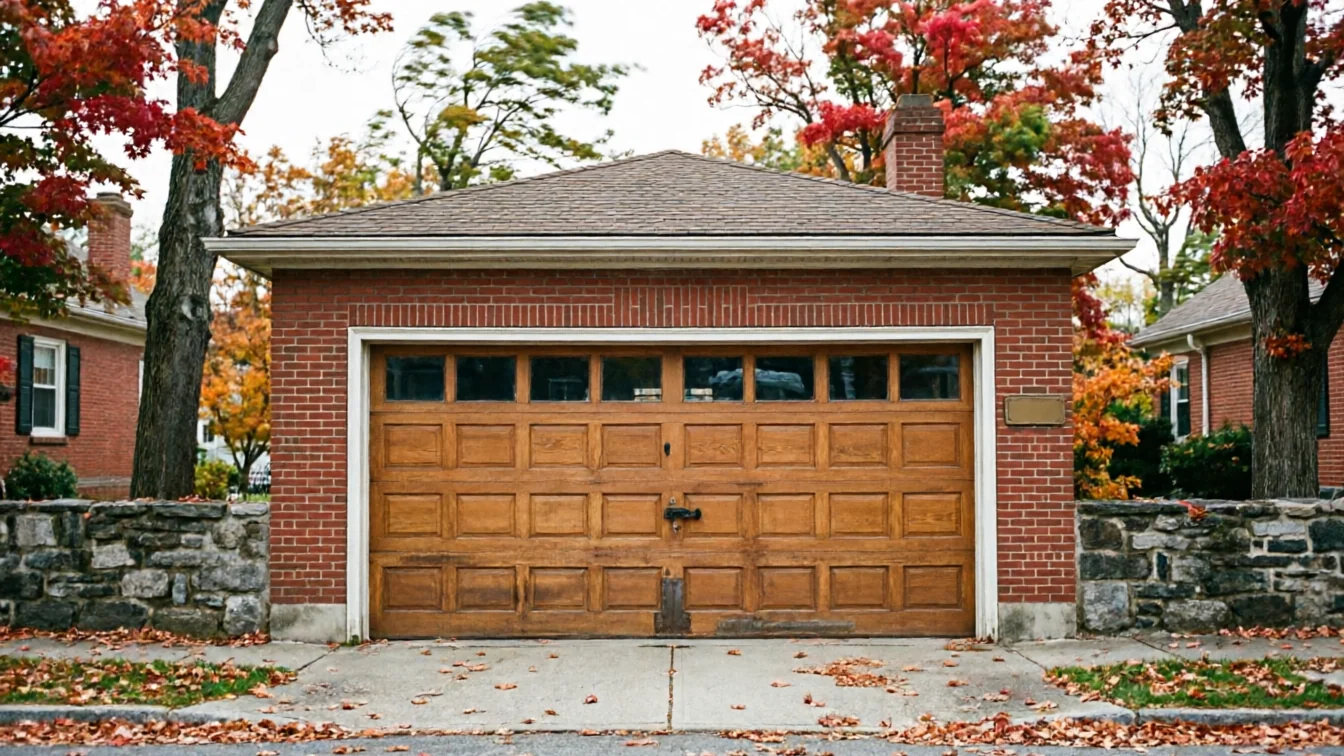
Princeton sits in a climate band classified as cold and severe, which means the building code here assumes real wind load on exterior openings, not just snow weight. A wide double door - anything in the 16-foot range - catches more of that load than a single 9-foot door, and it catches it across a panel surface that, on a lot of houses around here, was never built with a center brace. The housing stock in this service area runs 1938 to 2004 with a median build year of 1966, and most of it falls into that 1960s-70s wave across the 61 named areas we cover. A double door installed in that window typically has horizontal panel seams, thin-gauge steel or wood, and hinges sized for a calmer design standard than what gets specified today. None of that is a problem on a still day. It becomes one when a gust hits a door that's already a little out of plumb on its tracks, because the track - not the panel - is usually what gives first. The fix isn't always a new door. Sometimes it's a strut kit bolted to the back of the existing panels, which costs a lot less and holds up fine if the track and rollers are sound.
What It Costs
We're not going to put a number here that we can't stand behind, and door-to-door pricing on this kind of job depends on panel width, whether the existing track is salvageable, and whether a strut retrofit is enough or the door itself needs replacing. What we can tell you is how the decision tends to go: a double door on original 1960s-70s hardware is usually cheaper to brace than to replace, as long as the rollers and torsion spring are still in reasonable shape. If the spring is original or close to it, replacing that at the same time as adding bracing saves a second service call later. If the track itself is bent or the panel is cracked from stress, bracing won't fix that and you're into full replacement territory. We'll tell you straight which category your door is in before we quote anything.
The Common Mistake
The mistake we see most is someone noticing a double door rattling or bowing slightly in a gust and deciding to just add a second set of cables, or tighten the existing hardware, without checking whether the panel has center support at all. Tightening hardware on an unbraced wide door doesn't address the actual weak point - it just delays the moment the track pulls loose from the wall. On houses from the 1966-median build era, we also see owners assume the door was built the same as what's sold today, when a lot of these doors predate the thicker steel and reinforced stile construction that's now standard. Checking the back of the panel for a horizontal strut, rather than just listening for rattles, is the five-minute step that actually tells you where you stand.
The Situation
We work out of Princeton and cover the surrounding area, including Kingston, Rocky Hill, and Princeton Junction a few miles out, and farther towns like Hopewell, Cranbury, and Hightstown. Across that service area there are roughly 184,255 households and 84,817 owner-occupied houses, with a median household income around $108,851 - which tells you this is a region where people tend to fix things properly rather than patch them, and that's the standard we hold doors to. A lot of the double-door calls we get come from the older pockets of housing built before 2004, where the original door is still on the house and has simply never been evaluated for wind exposure. We don't treat every wide door as an emergency replacement. Plenty of them just need a brace kit and a track check.
Frequently asked questions
Is my double garage door at real risk in a wind event here?
If it's an original door from the 1960s-70s construction wave common in this area and it doesn't have a horizontal strut on the back of the panels, it's more exposed than a newer door with reinforced stiles. The climate here is classified cold and severe, which is exactly the kind of band where that gap matters. We can check the panel in a few minutes.
Can you just brace my existing door instead of replacing it?
Often, yes. If the track is straight and the rollers and spring are in decent shape, bolting a strut kit across the back of a wide panel is a legitimate fix and it's cheaper than replacement. If the track is already bent or the panel is cracked, bracing won't hold and replacement is the honest answer.
Why does a 16-foot door matter more than a single door here?
Surface area. A double door catches more wind load across a panel that, on houses built in the median 1966 era common to this area, usually wasn't engineered with a center brace. A single 9-foot door on the same hardware era has less panel to flex, so it's a lower-priority check.
Related garage door services in Princeton
More garage door guides
Book garage door service in Princeton
Call now or request a quote - tell us what the door is doing and where you are.